


Which Milling Machine Features Raise Cost Without Adding Real Value
Start with the cost drivers that actually affect output
A milling machine can be made expensive very quickly. The problem for procurement is that price often rises faster than useful production value. The safest way to buy is to separate features that improve part accuracy, cycle time, rigidity, and uptime from features that mainly look impressive on a quotation.
If you are sourcing a Milling machine for real shop use, the question is not whether a feature is advanced. The question is whether it changes your part mix, labor requirement, setup time, or scrap rate enough to pay back the extra investment. That sounds obvious, but many buying mistakes happen because teams compare machine specifications before they define what the machine will actually run.
Check the feature against your actual parts, not the brochure
A long options list does not mean a better purchase. Use this checklist when reviewing quotes.
- Oversized work envelope: A larger travel range usually raises machine size, floor-space demand, and base cost. If your biggest part never comes close to using that stroke, you are paying for iron you will not monetize. Review the maximum part dimensions from your current and expected jobs, then add only realistic fixture clearance.
- More spindle speed than the tooling can use: High spindle speed sounds attractive, but if your work is mostly carbon steel, general metalworking, or heavy roughing, the gain may be limited. Faster is not automatically more productive when tooling, material, and cutting strategy do not support it.
- Extreme precision beyond print tolerance: If the parts require standard production tolerance, paying for ultra-high positioning performance can be wasteful. What matters is whether the machine can hold your required tolerance consistently during real shifts, with heat, tool wear, and operator changeovers.
- Automatic functions with low utilization: Auto doors, advanced probing packages, pallet systems, and complex chip management can be worthwhile in high-volume, stable production. In low-mix or medium-batch work, some of these options sit idle while still adding purchase and maintenance cost.
A quick internal test helps: list your top 20 jobs by volume or margin, then ask which quoted feature changes throughput or setup time on those jobs. If the answer is “almost none,” move it out of the base requirement.
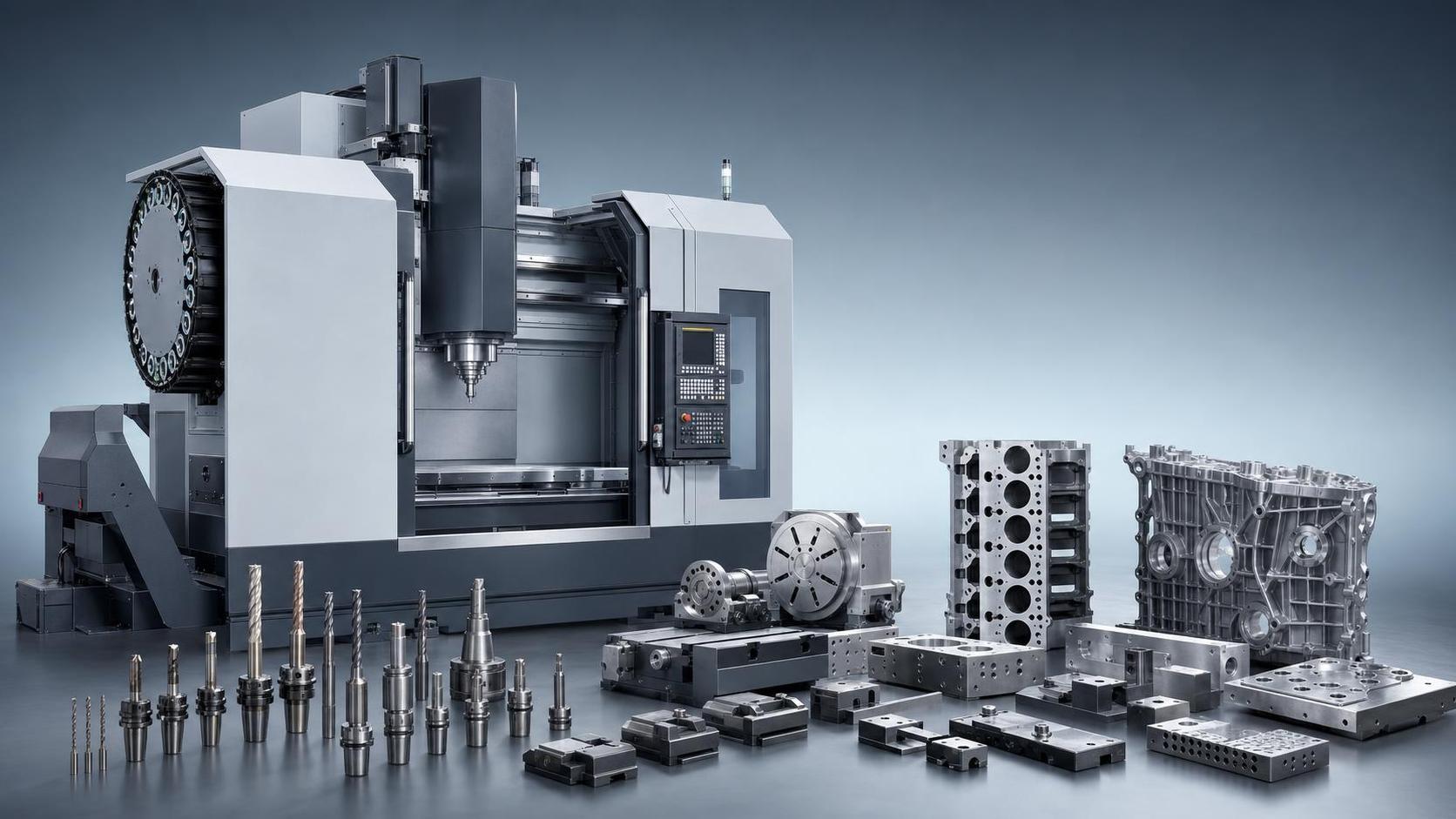
Features that often look premium but underdeliver
Some upgrades are not bad. They are just frequently mismatched to the buyer’s real operating profile.
- Excessive axis count for simple geometry. If your shop mostly handles prismatic parts, slots, holes, and standard faces, moving from a simpler configuration to a more complex one can raise programming time, training needs, and repair exposure without improving output enough. More axes make sense when they reduce setups or enable work you genuinely cannot win otherwise.
- Very large tool magazines for low tool-count jobs. A bigger magazine is useful when jobs require many tools in one cycle or when unattended running is realistic. If most of your parts use a limited tool set, the extra capacity becomes a cost line instead of a productivity gain.
- High-end control add-ons that no one will use. Advanced conversational features, simulation packages, or specialized interface modules can be valuable, but only if your programmers and operators use them. Ask for the exact functions your team needs, not the highest software tier by default.
- Appearance upgrades sold as machine quality. Enclosure finish, display size, or cosmetic details may influence perception, but they do not replace spindle stability, guideway condition, electrical quality, or serviceability. Procurement should keep visual upgrades at the bottom of the decision stack.
Where buyers usually misread value
One common mistake is treating “future-proofing” as a blank check. Some reserve capacity is sensible. Buying a machine for a hypothetical job mix that has not been quoted, scheduled, or commercially validated is where budgets get distorted.
Another mistake is comparing only purchase price and feature count. For a Milling machine, ownership cost is shaped by tooling compatibility, power requirements, operator learning curve, spare parts access, and downtime risk. A feature that adds complexity but has no clear use case can make the machine more expensive twice: once at purchase, then again in support and lost availability.
A practical quote-review table
Watch for accessory logic, not just machine logic
Procurement teams sometimes focus so hard on the main machine that they overlook whether a simpler adjacent tool would handle the task more economically. For example, if part of the workflow is portable holemaking or work on large steel structures, a dedicated unit such as Magnetic drill VD60 may fit the job better than pushing every operation toward a larger machining platform. That does not replace a milling center, but it does matter in budgeting: not every metalworking requirement should be solved by buying more machine than the process needs.
This is especially relevant when evaluating mixed workshops serving shipbuilding, automotive manufacturing, aerospace support work, oil and gas fabrication, or general metalworking. A buyer who maps operations correctly can avoid paying for milling features that are only compensating for poor process allocation.
Questions to put back to the supplier before approving the PO
- Which quoted options directly reduce setup count on our target parts?
- Which options require additional software, tooling, or operator training to deliver the claimed benefit?
- What maintenance items are introduced by the optional package?
- Can the same production target be met with a smaller specification and a better fixture or tooling plan?
- Which features are standard, and which are bundled in a way that prevents clean cost comparison between suppliers?
Those questions tend to expose inflated configurations very quickly. A useful feature usually has a clear operational path: fewer setups, shorter cycle time, lower scrap, less labor, or better process stability. If the supplier cannot connect the option to one of those outcomes in your production context, it is probably a cost adder rather than a value driver.
Use a buying sequence that filters out expensive noise
Start with part size, material, tolerance, batch pattern, and setup frequency. Then define the minimum machine capability that covers those conditions with margin. Only after that should you compare premium options. This order matters. It keeps the buying decision tied to output and cost recovery instead of feature enthusiasm.
For most procurement teams, the better purchase is not the machine with the longest option sheet. It is the one that matches the work, stays reliable, and leaves room in the budget for tooling, service, and operator readiness. That is where real value usually sits.
