


How to Compare Vertical and Horizontal Milling Machine Setups
How to Compare Vertical and Horizontal Milling Machine Setups
The real comparison between vertical and horizontal milling machine setups is not about which one is “better.” It is about where the spindle sits, how the cutter meets the workpiece, and what that geometry does to rigidity, chip flow, tool access, fixturing, and cycle time. Those factors decide whether a machine feels efficient on the shop floor or becomes an expensive compromise.
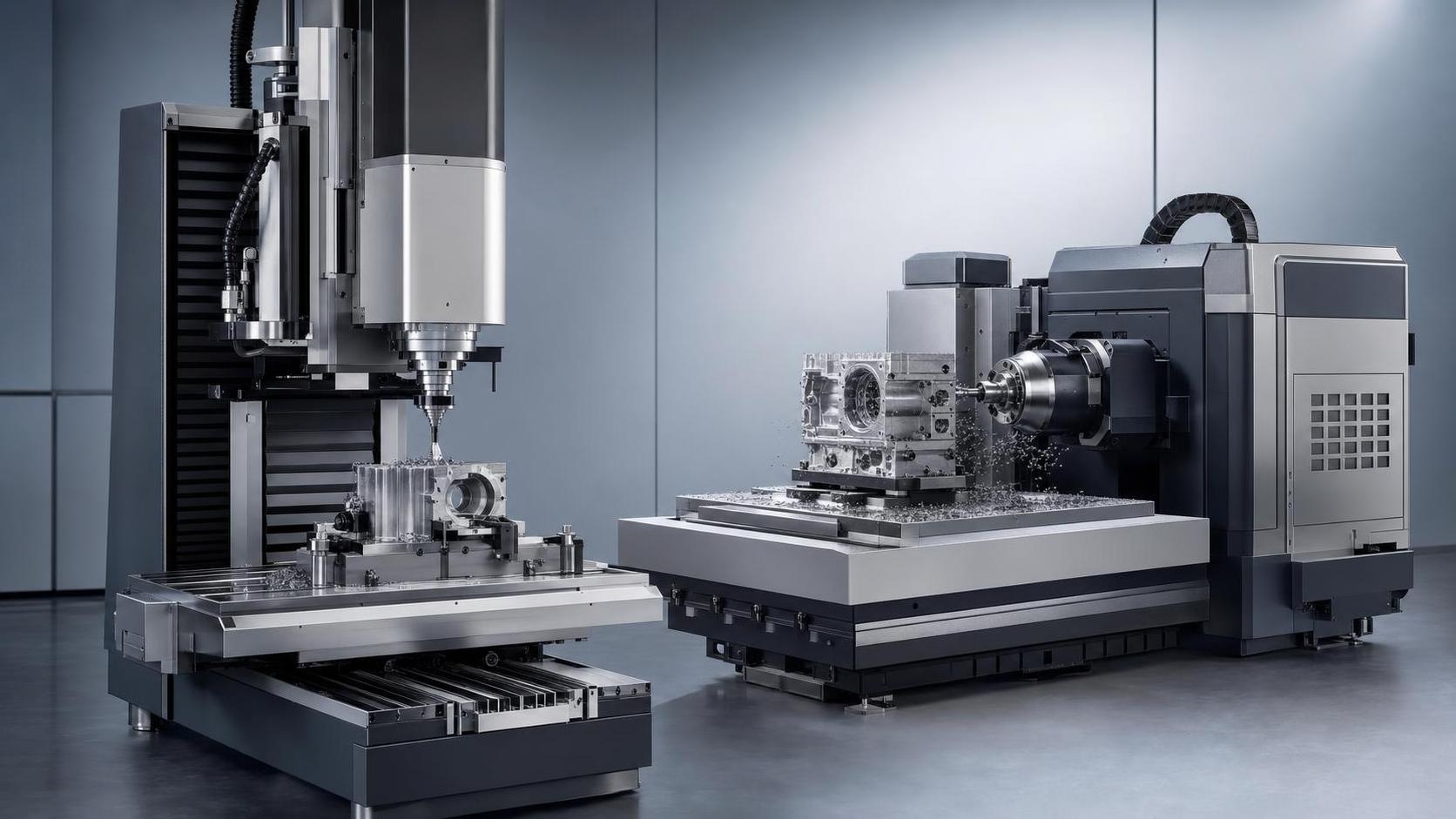
A vertical Milling machine places the spindle above the table, so the tool cuts downward into the part. That sounds simple, but it changes how programmers, setters, and process engineers work. Visibility is usually better, setup tends to be more intuitive, and it is often easier to switch between one-off jobs, repair work, prototypes, and medium-complexity components. A horizontal setup rotates that relationship: the spindle is parallel to the table, and the cutter engages from the side. This usually favors heavier material removal, better chip evacuation, and multi-face machining when the process is built for volume and consistency.
That is why evaluators should resist a common shortcut: comparing only travel, spindle power, or purchase price. Two machines with similar headline specifications can behave very differently once you load real parts, especially when deep pockets, side milling, slab cutting, or repeated indexing operations are involved.
What changes in practice
Vertical machines are often chosen because they are flexible. If the work mix includes plates, molds, tooling details, housings, or features that need frequent operator inspection, the vertical arrangement usually makes sense. Tool changes, work offsets, edge finding, and in-process checks are generally easier to manage. For technical evaluation, this matters when the factory is not running a single stable product family but a mix of small batches and engineering changes.
Horizontal machines start to show their value when machining time is dominated by metal removal rather than frequent setup intervention. Because chips tend to fall away from the cut instead of collecting in the pocket, the machine can maintain more stable cutting in roughing operations. In many production environments, that supports longer tool life and fewer interruptions, although the result still depends on cutter selection, coolant delivery, material type, and workholding quality.
If the part requires machining on several sides, a horizontal platform is also easier to pair with tombstones, pallets, or indexing fixtures. That can reduce the number of times a part is unclamped and re-referenced. Fewer manual interventions usually mean less stack-up error and better repeatability between shifts.
A useful decision frame
This table should not be read as a rulebook. It is a filter. Once you know where your production pressure really sits, the machine type becomes easier to justify.
Where evaluators often misread the choice
One frequent mistake is assuming a horizontal machine is automatically the answer for all high-output work. If the part family changes often, fixturing is still immature, or programming resources are limited, the extra capability may not convert into real throughput. The machine is only as productive as the process around it.
The reverse mistake happens too. Some teams stay with vertical platforms because operators know them well, even when repeated re-clamping is consuming labor, extending lead time, and creating avoidable variation. At that point, the issue is no longer operator preference. It is process architecture.
A better question is this: where does the current process lose time or accuracy? If the answer is “during setup, proving out, and small-batch changeovers,” vertical may remain the right direction. If the answer is “during roughing, part handling, and repeated multi-side operations,” horizontal deserves closer attention.
Look beyond the spindle
In equipment assessment, the spindle orientation is only one layer. Table load, axis acceleration, control capability, tool magazine size, coolant strategy, probing options, pallet handling, and fixture repeatability often have more impact on delivered capacity than the vertical-versus-horizontal label alone. Shops that machine difficult alloys or long-running components usually discover this quickly.
That is also where supplier experience matters. Companies building precision machine tools and industrial cutting solutions tend to see the same pattern: buyers initially compare machines as isolated assets, then realize the real decision sits in process matching. Shandong Honcan Machinery Equipment Co., Ltd., for example, works across CNC machine tools, intelligent manufacturing systems, and cutting applications, which is exactly the kind of cross-process view needed when a milling platform is being evaluated as part of a broader production cell rather than as a standalone purchase.
Even support equipment can influence that judgment. In industrial applications where holemaking, on-site preparation, or steel structure work sits upstream or downstream of milling, a compact tool such as Magnetic drill VD48E may be more relevant to workflow efficiency than another marginal gain in machine specification. Its 48 mm maximum drilling diameter, 1450 W motor, and 13000 N magnetic base suction describe a different task category, but they illustrate the broader evaluation principle: choose equipment by operation logic, not by category prestige.
How to make the decision hold up
A sound comparison uses actual parts or at least representative process families. Review how many faces are machined, how chips behave, how often the part is re-clamped, what tolerance chain is most sensitive, and whether spindle time or handling time is the true bottleneck. If possible, estimate output using fixture strategy and toolpath logic, not just machine brochure values.
For technical evaluators, the most reliable conclusion is usually not “vertical for precision, horizontal for productivity.” Both can deliver precision, and both can waste money when mismatched. The stronger conclusion is narrower: choose vertical when accessibility, agility, and mixed-job responsiveness drive value; choose horizontal when chip control, multi-side efficiency, and process repeatability carry more weight. That distinction is less dramatic than marketing claims, but it is closer to how good manufacturing decisions are actually made.
