


When to replace annular cutters used with the Magnetic drill VD50
When to Replace Annular Cutters Used with the Magnetic Drill VD50
Knowing when an annular cutter has reached the end of its useful service life is a practical maintenance issue, not a cosmetic one. On a Magnetic drill VD50, a worn cutter can turn a routine hole-making task into a slow, hot, unstable operation. The risk is not limited to a poor-looking hole. Excessive cutting force can affect cutter retention, overload the drill motor, weaken magnetic holding conditions, and create unnecessary exposure for the operator.
For maintenance teams, the difficult part is that cutters do not fail on a clean schedule. A cutter used on clean mild steel with stable coolant delivery may remain productive for a long time. The same diameter cutter can deteriorate quickly when drilling oxidized plate, layered material, stainless steel, hard structural sections, or workpieces with interrupted surfaces. Replacement decisions should therefore be based on drilling behavior and inspection, rather than on the number of holes alone.
The First Warning Usually Comes from the Drill, Not the Cutter
A healthy annular cutter starts cutting with moderate feed pressure, produces relatively consistent chips, and reaches the breakthrough point without the machine struggling. Once the cutting edges lose sharpness, the Magnetic drill VD50 will often show the problem before the cutter looks obviously damaged. Operators may need to push harder on the feed handles, drilling time becomes noticeably longer, and the machine may begin to sound strained.
Slower drilling is one of the most reliable early signs, provided the workpiece material, cutter diameter, speed setting, and coolant conditions have not changed. If a familiar job suddenly takes longer with the same setup, do not immediately assume the drill is underpowered. Inspect the cutter first. Continuing with a dull cutter often creates heat that further damages the tooth geometry, making a recoverable condition worse.
In practice, it helps to ask a simple question: is the cutter still cutting the steel, or is it mainly rubbing and generating heat? Rubbing is the stage where replacement should not be postponed.
Inspect the Teeth, but Read the Whole Cutting System
Remove the cutter only after the machine is isolated and the tool has cooled sufficiently. Examine every tooth, not just the section that is easiest to see. Uneven wear is common because the cutter may have entered the work at a slight angle, encountered a weld zone, or been used on material with a non-uniform surface.
Replace the cutter when you find chipped teeth, flattened cutting lands, rounded tooth corners, cracking near the tooth base, or visible discoloration associated with overheating. Blue or dark straw coloration does not automatically prove that the cutter is unusable, but it is a strong warning that the cutting edge may have lost hardness or that coolant and feed practices need attention. A cutter with one damaged tooth is not a minor issue: the remaining teeth take an uneven load, and the hole quality often declines quickly.
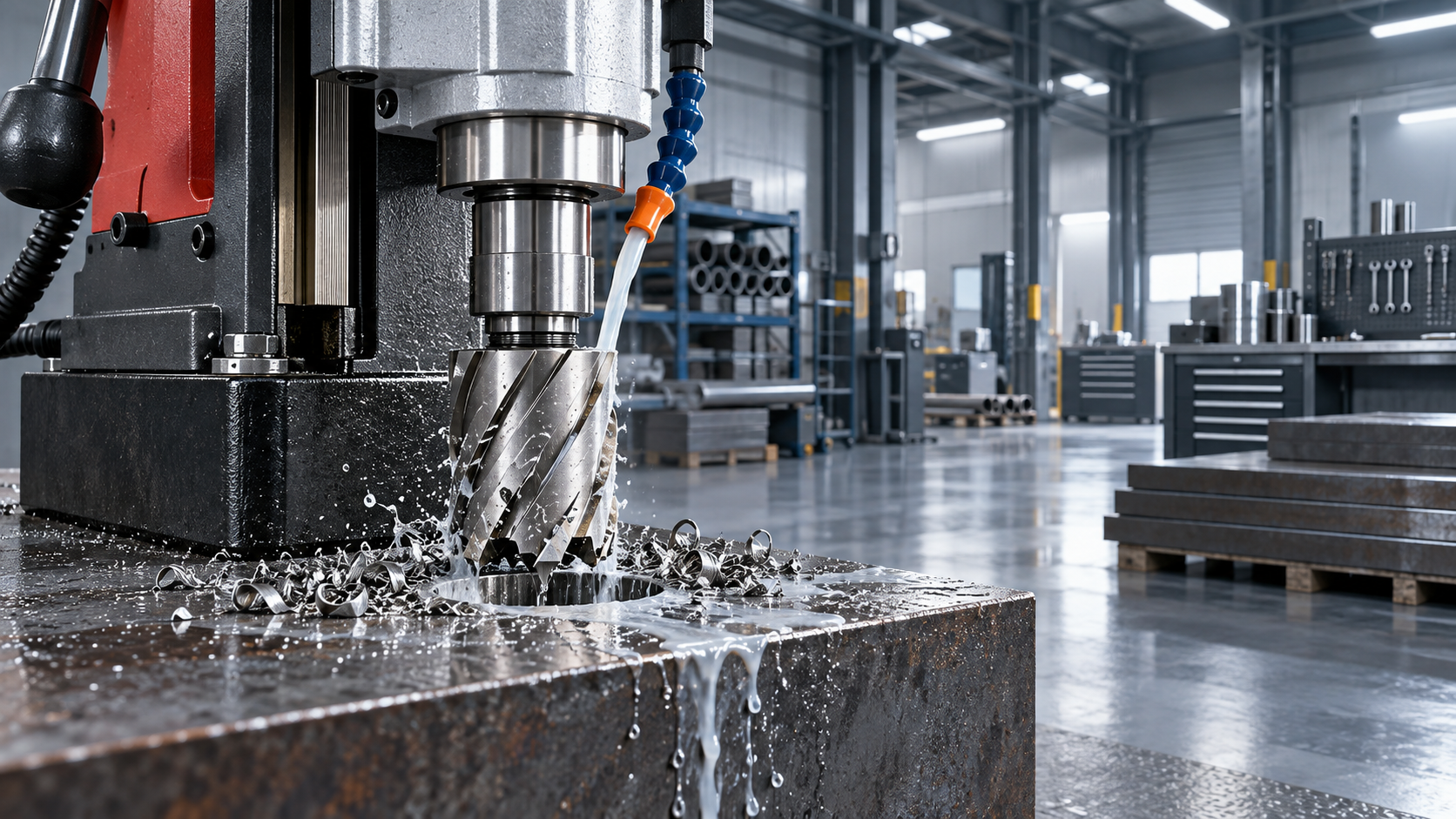
Also inspect the pilot pin, ejector function, arbor contact surfaces, and cutter shank. A blunt pilot pin can make positioning difficult, while poor slug ejection can be mistaken for a cutter problem. If the cutter slips in the arbor, the shank becomes scored, or the retaining arrangement is damaged, replacement or corrective service is necessary even if the teeth still appear sharp.
Heat, Chips, and Hole Finish Tell a More Complete Story
Heat is expected in metal cutting; uncontrolled heat is not. A cutter that becomes excessively hot during ordinary drilling may be dull, but it may also be running too fast, receiving insufficient coolant, or being fed too lightly. Light feed is frequently misunderstood. When the tool is barely engaged, it can rub rather than form a proper chip, which raises temperature and accelerates edge wear.
Chip shape provides a useful field check. Clean, reasonably uniform chips generally indicate stable engagement. Fine dust-like particles, burned chips, or irregular fragments can point to dull teeth, unsuitable speed, poor lubrication, or a workpiece condition that needs a different cutting approach. Maintenance personnel should compare the current chips with those produced when the same cutter was known to perform well.
The hole itself is another indicator. Rough edges, heavy burrs, out-of-round holes, or a finish that looks torn rather than cut are reasons to stop and investigate. Burrs alone do not always require immediate replacement; thin material and breakthrough technique can influence burr formation. However, burrs combined with increased drilling time, vibration, and heat are a clear sign that the cutter should be changed.
Vibration Is a Safety Signal, Not Just an Annoyance
A Magnetic drill VD50 depends on stable contact between the magnetic base and the workpiece. If vibration increases, stop treating it as a normal consequence of heavy work. Dull or damaged cutter teeth can increase torque and cause the drill to chatter, especially near breakthrough. That movement can also be amplified by uneven material, paint, scale, inadequate magnetic contact, loose slides, or an improperly clamped cutter.
Before installing a new cutter, check the full setup. Clean the underside of the magnetic base and the work surface. Confirm that the material thickness and condition are appropriate for magnetic drilling. Check slide adjustment, arbor security, coolant delivery, and the use of a safety chain where required by the working situation. Replacing cutters without correcting the root cause only shortens the life of the next one.
Do Not Judge Cutter Life by Hole Count Alone
A maintenance log is valuable, but it should record more than the number of holes drilled. Note cutter diameter, workpiece type, approximate thickness range, whether coolant was used, and the reason the tool was removed. Over time, this reveals patterns. For example, frequent overheating of cutters in one application may suggest that the cutting speed or fluid delivery needs review, while repeated tooth chipping may indicate interrupted cuts, hard inclusions, or poor alignment.
There is also a cost decision involved. Some high-quality annular cutters can be professionally resharpened when tooth damage is limited and the cutter body remains sound. Others should be discarded rather than reused, particularly if cracks, severe tooth loss, distorted geometry, or shank damage are present. The practical standard is not whether the cutter can still make a hole. It is whether it can make that hole safely, consistently, and without forcing the VD50 to work outside normal conditions.
Replacement Works Best Alongside Better Material Preparation
In fabrication shops, cutter wear is sometimes linked to what happens before the magnetic drill reaches the job. Heavy burrs, uneven flame-cut edges, unstable workpieces, and poor access can all make drilling harder than it needs to be. Where stock preparation is part of the workflow, a controlled cutting process can reduce downstream fitting and drilling problems. For example, hydraulic clamping and selectable blade speeds on the Band Saw Machine GH4228 support consistent cutting of industrial material before secondary hole-making operations begin.
This does not mean every cutter issue starts at the saw. It means maintenance should look at the process chain. A cleanly prepared, firmly supported workpiece gives the annular cutter a better chance of performing as intended.
A Practical Change-Out Rule for the Workshop
Replace the annular cutter immediately when teeth are chipped or cracked, the cutter overheats repeatedly under verified correct operating conditions, hole quality becomes unacceptable, or vibration rises after the drill setup has been checked. Change it before the next critical hole if drilling time is steadily increasing and more feed force is required than normal. Do not wait for a complete failure in the middle of a structural, maintenance, or site installation task.
Reliable tooling is built from small decisions made early: use the right speed, maintain coolant flow, keep the magnetic base and work surface clean, avoid forcing a dull cutter, and document recurring wear patterns. Companies focused on precision engineering, such as Shandong Honcan Machinery Equipment Co., Ltd., understand that tool reliability is not only about supplying equipment. It is also about helping maintenance teams recognize the moment when continued use stops being productive and starts becoming a risk.
