


What affects industrial milling machine running costs most?
When evaluating an industrial milling machine, purchase price is only the beginning. For procurement teams, the biggest impact on running costs often comes from energy consumption, tooling wear, maintenance frequency, operator efficiency, and machine uptime. Understanding these cost drivers helps buyers compare options more accurately, reduce long-term ownership expenses, and choose equipment that delivers reliable productivity instead of hidden operational burdens.
Which factor usually drives industrial milling machine running costs the most?
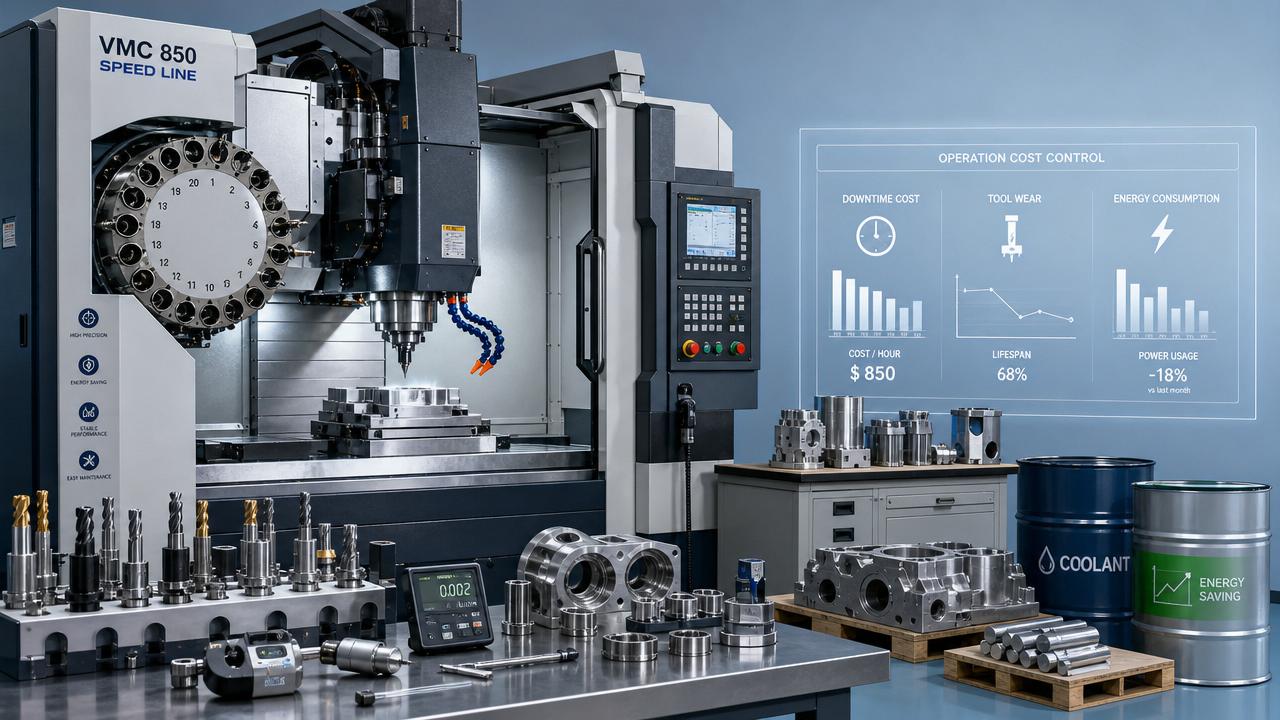
For most buyers, the largest long-term cost is not the machine’s initial price. It is the combined effect of downtime, tooling consumption, power use, maintenance demands, and labor efficiency.
Among these, unplanned downtime often has the biggest financial impact. A machine that stops production frequently can quickly erase any savings gained from a lower purchase price.
That is why procurement teams should assess total cost of ownership, not just capital expenditure. A cheaper industrial milling machine may become more expensive over several years of operation.
How much does energy consumption really matter?
Energy costs matter most in facilities running multiple shifts or processing hard materials continuously. Spindle power, feed performance, cooling systems, and standby efficiency all affect electricity usage.
Machines with modern drives, optimized control systems, and efficient motors can reduce energy waste. Over time, even moderate efficiency gains can produce meaningful savings across a full production schedule.
Buyers should ask suppliers for real operating power data, not only rated motor figures. Rated power does not always reflect actual power draw during daily machining tasks.
Why do tooling wear and cutting performance change operating costs so much?
Tooling is a major recurring cost in milling operations. Machine rigidity, spindle stability, thermal control, and vibration behavior directly influence tool life and surface finish consistency.
A stable machine allows higher cutting efficiency while reducing premature tool wear. This lowers insert replacement frequency, minimizes scrap risk, and supports predictable production planning for purchasing teams.
When comparing equipment, buyers should consider whether the machine can maintain tolerance and cutting stability during extended runs, especially for demanding materials or high-volume parts.
How do maintenance needs affect the real cost of ownership?
Maintenance costs are not limited to spare parts. They also include technician time, lost production hours, emergency service charges, and the operational disruption caused by repeated breakdowns.
A well-designed industrial milling machine should offer accessible service points, reliable lubrication systems, durable guideways, and clear diagnostic support. These features reduce maintenance complexity and recovery time.
Procurement teams should ask about preventive maintenance intervals, common failure points, local service availability, and spare parts lead times before making a final decision.
Why does operator efficiency matter for procurement decisions?
Even a capable machine can become expensive if it is difficult to program, set up, or monitor. Control usability, automation features, and setup convenience directly affect labor productivity.
Features such as user-friendly CNC systems, automatic tool changers, probing options, and stable repeatability can shorten setup time and reduce dependence on highly specialized operators.
For buyers, this means lower training costs, fewer operating errors, and better output consistency. In many factories, labor-related efficiency has a larger cost impact than expected.
What should procurement teams compare before buying?
The most useful comparison method is to evaluate machine cost per productive hour, not simply the quoted equipment price. This approach gives a clearer picture of true operational value.
Key questions include: How reliable is the machine under continuous load? How long do tools last? What is the typical maintenance burden? How much power does it consume in real production?
It is also important to review supplier capability. A manufacturer with strong engineering, consistent quality control, and dependable after-sales support can reduce purchasing risk significantly.
Conclusion
The biggest drivers of industrial milling machine running costs are usually downtime, tooling wear, maintenance frequency, energy consumption, and operator efficiency working together over time.
For procurement professionals, the best decision comes from looking beyond purchase price and focusing on stable productivity, service support, and total lifecycle value. That is where real savings are created.
