


Do simple parts really need 5-axis CNC machining?
Do I need 5-axis CNC machining for simple geometric parts? It is a practical decision in general machinery equipment, where precision, cost, setup time, and throughput must stay balanced. Many rectangular, round, or flat-sided parts can be produced efficiently on 3-axis or 4-axis machines. However, some “simple” parts become less simple when tolerances tighten, secondary setups increase, or multiple angled features appear. The right answer depends on machining access, batch size, finish expectations, and process stability over the full production cycle.
Why a checklist helps answer: Do I need 5-axis CNC machining for simple geometric parts?
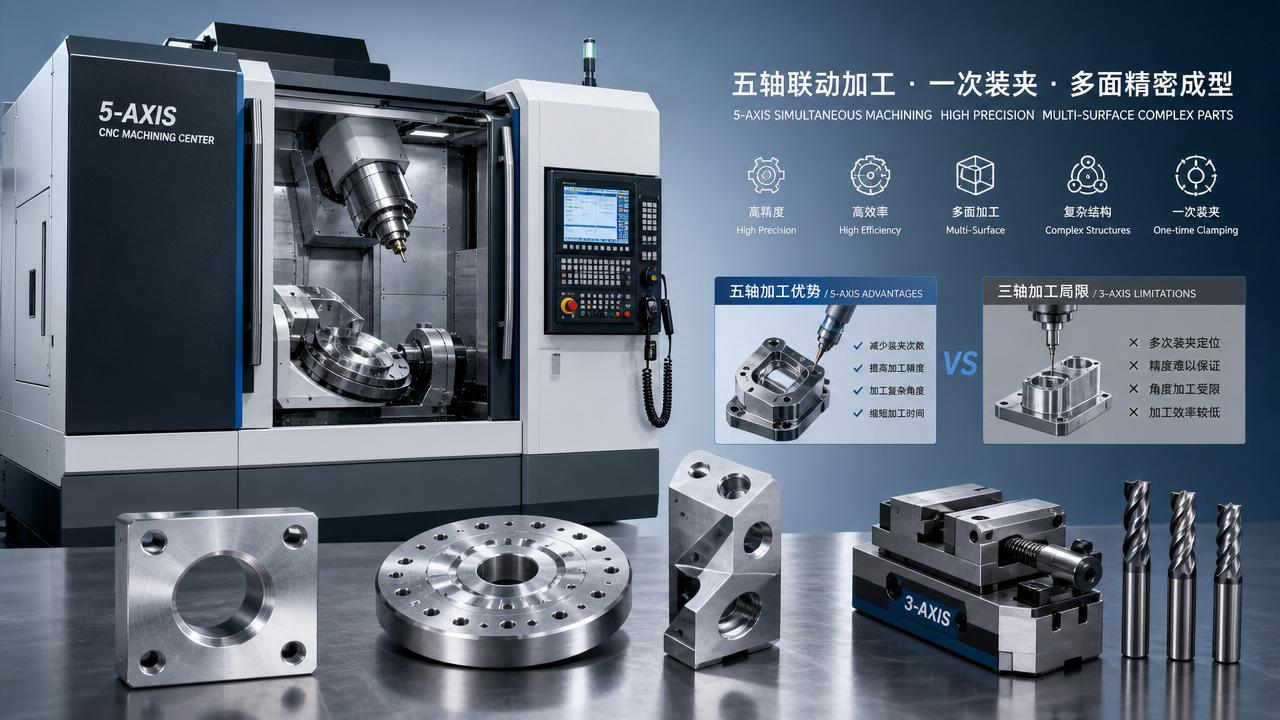
A checklist prevents decisions based only on machine capability or marketing language. In precision engineering, the best process is not the most advanced process. It is the process that delivers repeatable quality at the lowest total manufacturing cost.
For simple geometric parts, 5-axis CNC machining may reduce setups, improve feature alignment, and shorten lead time. Yet it may also add programming effort, higher hourly rates, and unnecessary complexity if the part geometry is truly straightforward.
Shandong Honcan Machinery Equipment Co., Ltd. focuses on precision CNC machine tools and intelligent manufacturing systems that match process capability with real production needs. That same logic should guide part evaluation.
Core checklist for simple parts
- Check feature orientation first. If all critical surfaces are reachable from one or two directions, 3-axis or 4-axis machining often handles the part more economically.
- Review tolerance stack-up across setups. When flatness, position, or angular relationships span multiple faces, 5-axis CNC machining can reduce alignment error significantly.
- Count the number of fixtures required. If a simple part needs several reclamping steps, the setup burden may outweigh the lower machine hourly cost.
- Evaluate tool access around walls, pockets, and angled holes. Limited access may force long tools on 3-axis equipment and degrade surface finish or dimensional stability.
- Compare batch size with programming effort. For very small runs, advanced toolpaths may not pay back unless they also remove manual intervention or quality risk.
- Measure cycle time as total process time, not spindle time alone. Loading, refixturing, inspection, deburring, and handling often change the economics more than cutting speed.
- Assess material behavior carefully. Tough alloys, thin walls, and distortion-sensitive blanks may benefit from fewer setups and better cutting angles available in 5-axis machining.
- Confirm finish requirements on visible or sealing surfaces. Better tool presentation can improve surface quality and reduce hand finishing on certain simple geometric parts.
When 3-axis or 4-axis is usually enough
If the component is a plate, bracket, spacer, flange, or block with standard drilled and milled features, the answer to “Do I need 5-axis CNC machining for simple geometric parts?” is often no. A well-designed 3-axis process can achieve excellent accuracy and lower cost.
This is especially true when tolerances are moderate, datums are easy to establish, and feature relationships stay on the same plane or along a single indexed axis. In these cases, simpler machines deliver faster programming, easier operator training, and efficient scheduling.
Typical examples
Base plates, motor mounts, simple covers, manifolds with straight access, and shafts with indexed side features are common examples. These parts rarely require simultaneous 5-axis motion to meet industrial expectations.
When 5-axis adds value, even on simple-looking parts
Some parts look simple in a drawing, yet become difficult in production. Angled holes, compound chamfers, side pockets near tall walls, and multiple datum-sensitive faces can make conventional setups inefficient.
In these situations, 5-axis CNC machining can hold positional accuracy better by machining more features in one clamping. It can also shorten tools, improve rigidity, and reduce the risk of mismatch between faces.
Typical examples
Valve bodies with off-angle ports, compact housings with obstructed pockets, and simple prismatic parts demanding tight relationship control are strong candidates. Here, the question “Do I need 5-axis CNC machining for simple geometric parts?” often deserves a qualified yes.
Commonly overlooked risks
Ignore fixture cost carefully and the estimate may be misleading. A low machine hourly rate can hide expensive custom workholding, repeated touch-offs, and longer inspection routines.
Underestimate part handling and hidden non-cut time, and process comparisons become inaccurate. Every extra setup introduces labor, queue time, and another opportunity for dimensional drift.
Assume 5-axis always improves speed, and the result may disappoint. For very simple geometric parts, programming overhead and machine availability can outweigh any reduction in setups.
Forget downstream assembly effects, and feature relationships may fail functionally even when individual dimensions pass. Datum strategy matters as much as machine type in precision machinery components.
Practical execution advice
- Start with the drawing and mark all critical datums, angular features, and tolerance chains before comparing machine platforms.
- Model the process route, including fixturing, probing, deburring, and inspection, instead of comparing spindle time only.
- Run a break-even estimate using batch size, setup count, scrap risk, and fixture investment.
- Choose 5-axis CNC machining only when it removes measurable process pain or protects critical quality requirements.
A balanced process decision supports productivity better than chasing maximum machine sophistication. Precision manufacturing performs best when capability, cost, and application fit together.
Conclusion and next step
So, do I need 5-axis CNC machining for simple geometric parts? Usually not by default, but sometimes absolutely yes when setup reduction, tolerance control, or tool access become decisive. The smartest choice is to review geometry, tolerance relationships, total process time, and fixture complexity as one system.
For general machinery equipment, a structured review delivers better outcomes than assumptions. If a part appears simple but creates repeated setup issues or unstable quality, compare a conventional route with a 5-axis route using real process data before finalizing production.
