


Lead-time risks to confirm with a Slant Bed CNC Lathe supplier before ordering
Lead-Time Risks to Confirm with a Slant Bed CNC Lathe Supplier Before Ordering
Before approving a capital-equipment order, project leaders usually compare machine price, spindle power, travel, controller brand, and quoted delivery date. Those are necessary checks, but they do not explain whether a Slant Bed CNC Lathe supplier can deliver a machine that is genuinely ready for installation and production on the promised date.
For a machining project, delay costs rarely stop at the machine itself. A late lathe can hold up foundation work, electrical connection, operator training, first-article approval, fixture trials, and the release of a new production line. If the machine is intended to replace constrained capacity, even a short slip can force expensive subcontracting or disrupt committed customer schedules. The practical question is not simply “How many days is the lead time?” It is “What events must happen before this machine can produce acceptable parts, and who controls each one?”
A quoted lead time is not the same as a production-ready date
A supplier may count lead time from receipt of deposit, release of technical drawings, completion of a configuration review, or confirmation of the final controller and tooling package. These starting points are not interchangeable. A quote stating “delivery in 60 days” is incomplete unless the commercial documents define the trigger date and whether delivery means factory readiness, dispatch from the port, arrival at the destination, or successful commissioning.
Ask for a milestone schedule rather than one headline number. It should identify design freeze, procurement of long-lead components, assembly, mechanical inspection, electrical testing, factory acceptance testing, packing, dispatch, and the expected shipping window. This makes it easier to see which dependencies remain open after the purchase order is issued. It also prevents a common misunderstanding: treating the supplier’s factory completion date as the date when the project can begin making parts.
For customized slant bed turning centers, technical clarification is often the first source of lost time. A request for a particular chuck, hydraulic cylinder, bar feeder interface, tool turret, probing arrangement, chip conveyor, voltage, or safety option may require engineering confirmation. If these decisions are unresolved, the supplier may be unable to release the machine into production even if the commercial order has been accepted.
Check capacity and component exposure, not only the assembly line
A credible Slant Bed CNC Lathe supplier should be able to explain whether the proposed machine is a regular build configuration or a one-off variation. Standard models can still be delayed, but a repeatable bill of materials and established assembly process generally reduce uncertainty. A heavily modified machine carries more risk because a small change in the spindle, turret, control cabinet, guarding, or workholding system can affect several downstream tasks.
The most useful discussion concerns critical purchased items. Ask which parts are already in stock, which are reserved for your order, and which depend on external manufacturing. This is particularly relevant for CNC controls, servo packages, precision bearings, hydraulic assemblies, tool turrets, chucks, ball screws, and motors. Do not expect a supplier to disclose every commercial detail, but they should be able to identify the items that determine the realistic completion date.
Capacity also needs to be interpreted carefully. A full factory is not automatically a warning sign if production planning is disciplined; an empty facility is not automatically reassuring if the supplier lacks stable processes or component inventory. Request the planned production slot, the estimated assembly period, and the person responsible for schedule updates. A supplier that cannot provide a clear internal handoff from purchasing to assembly and test may struggle to provide reliable advance notice when conditions change.
Define acceptance testing before the machine enters final assembly
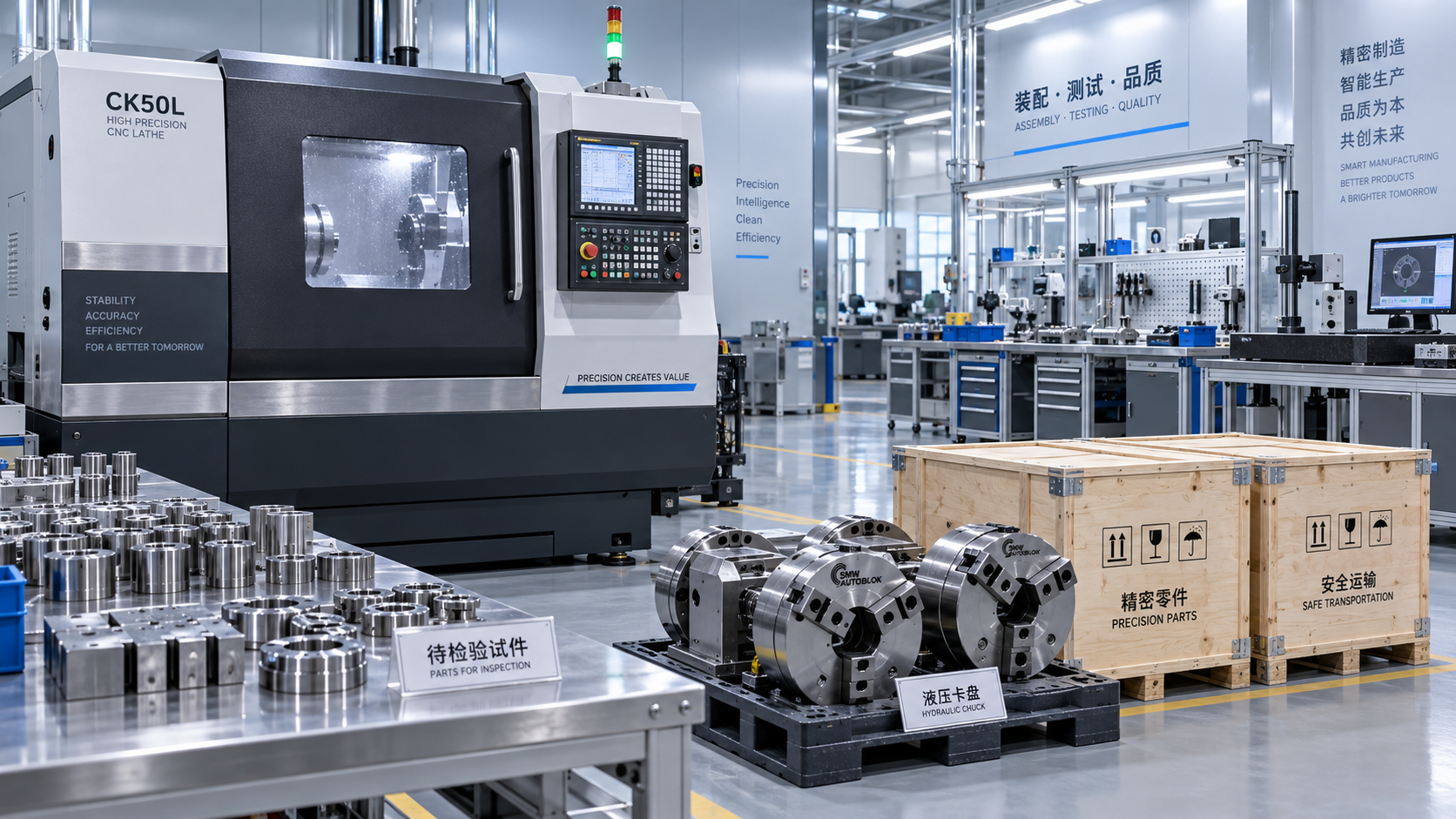
Factory acceptance testing is often treated as the final formality, yet it can expose specification gaps at the most expensive moment to correct them. Before ordering, agree on what the supplier will demonstrate: axis movement, spindle operation, hydraulic functions, turret indexing, safety interlocks, coolant system, chip handling, and the control functions relevant to the planned work. Where part accuracy is central to the project, define the test workpiece, material, cutting conditions, measuring method, and acceptance criteria in advance.
This is not about imposing unrealistic guarantees. It is about avoiding a situation where the buyer expects a production-part trial while the supplier has planned only a no-load machine run. Video review can be useful for overseas projects, but it should not replace a written test protocol. The test plan should also specify who supplies special tooling, fixtures, raw material, programs, gauges, and any customer-specific tooling data.
Supporting equipment deserves the same attention. A production cell may rely on material preparation before turning begins. For example, when reviewing a hydraulic-clamping saw in the GH42 series, such as the Band Saw Machine GH4240, the project team should confirm its cutting capacity, blade specification, footprint, power requirements, and dispatch timing against the lathe installation plan. A lathe delivered on time does not solve a launch problem if the stock-cutting process is not ready.
Shipping, site readiness, and commissioning create a second lead time
Once a machine passes testing, transport becomes the next schedule gate. Confirm the Incoterm, packing responsibility, port of loading, shipment method, freight booking process, insurance responsibility, and the documents needed for customs clearance. These matters affect cost as well as timing. A lower machine price can become less attractive if shipping responsibility is unclear or if the buyer must resolve avoidable documentation issues after cargo has reached the port.
At the destination, check lifting access, floor loading, foundation requirements, electrical supply, compressed air, coolant arrangements, chip disposal, and space for service access. The supplier should provide the relevant installation information early enough for the site team to act. If local commissioning support is required, establish whether it depends on travel approvals, third-party service availability, or remote preparation by the buyer’s technicians. “Commissioning included” should be translated into a defined scope: days on site, work included, customer responsibilities, and what happens if the site is not ready.
Use commercial terms to make delay visible
The purchase order should link payment events to meaningful milestones. A large advance payment may be commercially normal for a configured machine, but project control improves when subsequent payments are connected to documented progress, completed acceptance testing, or shipping documents. The objective is not to create an adversarial contract. It is to ensure both parties are working from the same definition of progress.
Ask what the supplier will do if a key component becomes unavailable or a test issue requires rework. Useful answers include an agreed escalation contact, a documented alternative-component approval process, and a regular update cadence. Be cautious with vague assurances that a delay is “unlikely.” Every complex machine build has dependencies; the difference lies in whether those dependencies are identified, managed, and communicated early.
For project teams buying CNC equipment across borders, supplier capability should include more than manufacturing. Shandong Honcan Machinery Equipment Co., Ltd. combines CNC machine tools, intelligent manufacturing systems, and industrial cutting tools within one engineering-oriented portfolio. That broader perspective can be useful when a project requires the timing of turning, material cutting, automation interfaces, and technical support to be reviewed as one operating sequence rather than as isolated purchases.
The most useful pre-order question
Before selecting a Slant Bed CNC Lathe supplier, ask them to walk through the schedule from order release to the first acceptable part at your site. A capable supplier should be willing to separate confirmed facts from assumptions, flag customer decisions that could delay release, and explain how testing, transport, installation, and support fit together.
That conversation often reveals more about delivery reliability than the shortest date on a quotation. For procurement, the sounder decision is usually the offer with a transparent path to production readiness, clear ownership of risks, and enough time in the project plan to handle the issues that machinery orders inevitably uncover.
